Key Takeaways
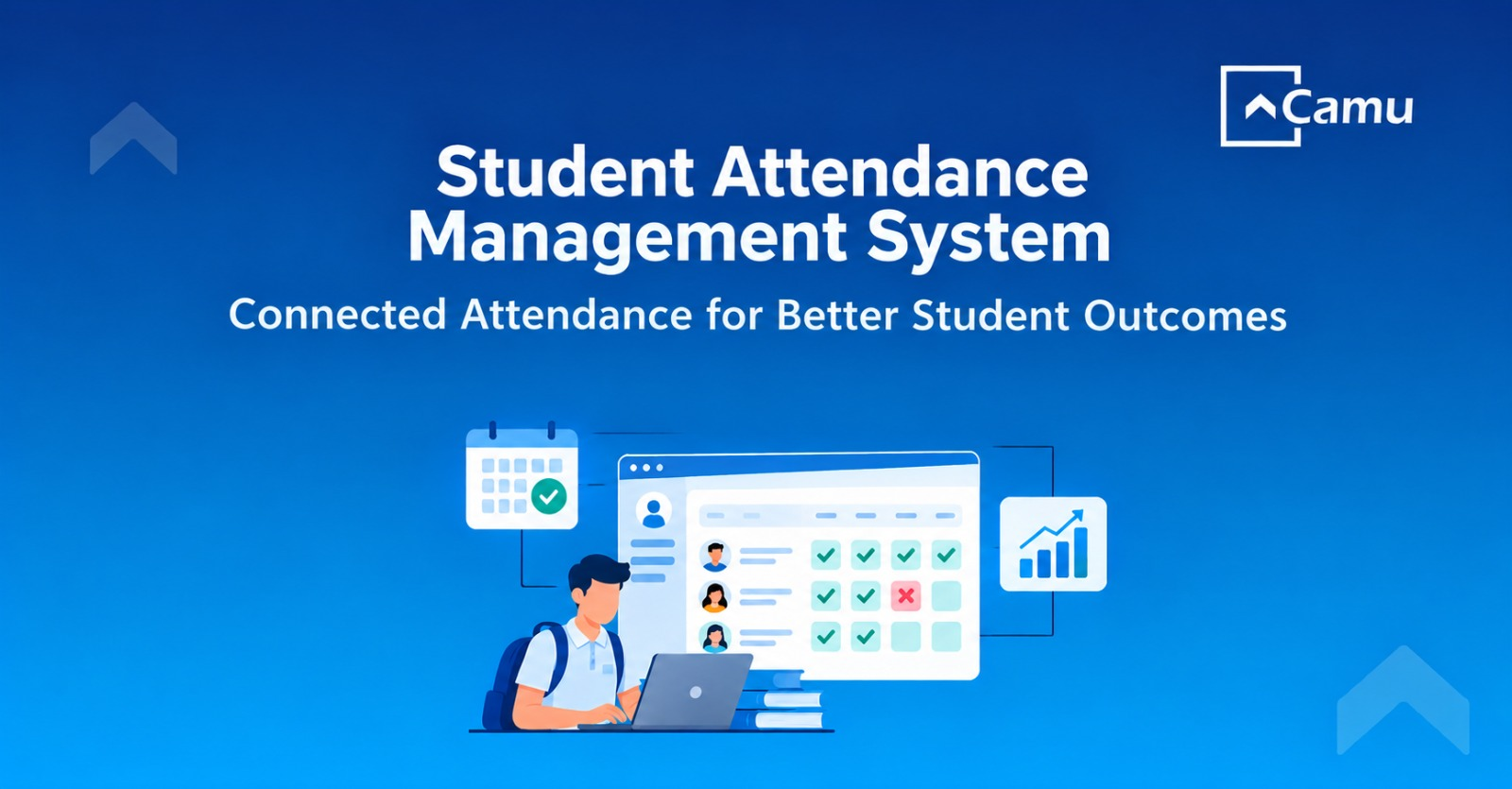
A student attendance management system helps institutions track attendance faster and more accurately.
Manual attendance processes create delays, errors, and limited visibility.
Attendance data helps faculty and administrators identify disengagement early.
Camu helps institutions manage attendance through flexible attendance modes, digital capture, communication, reports, and connected academic workflows.
What Attendance Management Means Today
For institutions, attendance is not only about marking who is present or absent. It is one of the earliest signals of student engagement.
When a student misses classes regularly, it may indicate a larger issue. It may be academic difficulty, lack of motivation, schedule conflict, personal challenge, or disengagement from the course.
If institutions see these patterns early, they get more time to act.
This is why a student attendance management system matters. It helps institutions move from routine attendance marking to better attendance visibility, faster follow-up, and stronger student engagement.
Why Manual Attendance Tracking Falls Short
Common challenges include:
Time spent on manual roll calls
Errors in attendance entry
Delayed updates
Difficulty tracking absentees
Proxy attendance risks
Manual report preparation
Limited visibility for mentors and academic heads
Late identification of low-attendance students
Manual attendance tracking may work for small batches. But as institutions grow, attendance data becomes harder to manage. Faculty need faster workflows. Administrators need clean reports. Students need transparency. Academic heads need real-time visibility.
That is where attendance management software for the education industry becomes important.
What an Automated Student Attendance Management System Should Do
An automated student attendance management system should make attendance faster, cleaner, and easier to monitor. It should support the full attendance workflow, from attendance capture to reports and follow-up.
A strong system should help institutions manage:
Digital attendance marking
QR code-based attendance
Facial recognition attendance
Biometric attendance
RFID-based attendance
Class-wise attendance records
Course-wise attendance tracking
Student attendance history
Absentee reports
Faculty attendance workflows
Attendance cut-off rules
Late attendance tracking
Save and publish controls
Parent and student communication
Reports and dashboards
The goal is not only automation. The goal is visibility.
When attendance data is updated on time, faculty, mentors, administrators, and leadership teams get a clearer view of student participation.
Attendance as an Early Engagement Signal
Attendance is one of the simplest ways to identify student disengagement.
A student who misses one class may not need intervention. But repeated absence across courses may need attention.
An attendance tracker for the education sector should help institutions identify these patterns faster.
For example:
A student has low attendance in one course
A student is absent across multiple classes
A batch shows declining participation
A course has repeated absentee trends
A department needs attendance visibility before exams
These insights help academic teams move from reactive follow-up to early support.
When attendance is connected with timetable, student records, and communication workflows, institutions can identify absentee patterns earlier and act with better context.
That context helps them ask better questions:
Is the student struggling academically?
Is the student missing specific classes?
Is there a pattern across courses?
Does the student need mentor support?
Should parents or advisors be informed?
Is the student at risk of exam ineligibility?
This makes attendance data useful for student success.
How Camu Supports Attendance Management
Camu helps institutions manage attendance through connected academic workflows, not as a standalone classroom task.
Institutions can configure attendance based on how they operate, including period attendance, morning attendance, afternoon attendance, or day attendance. For period attendance, institutions can also configure a cut-off window within which faculty must mark attendance. This helps reduce delayed updates and keeps attendance records more timely.
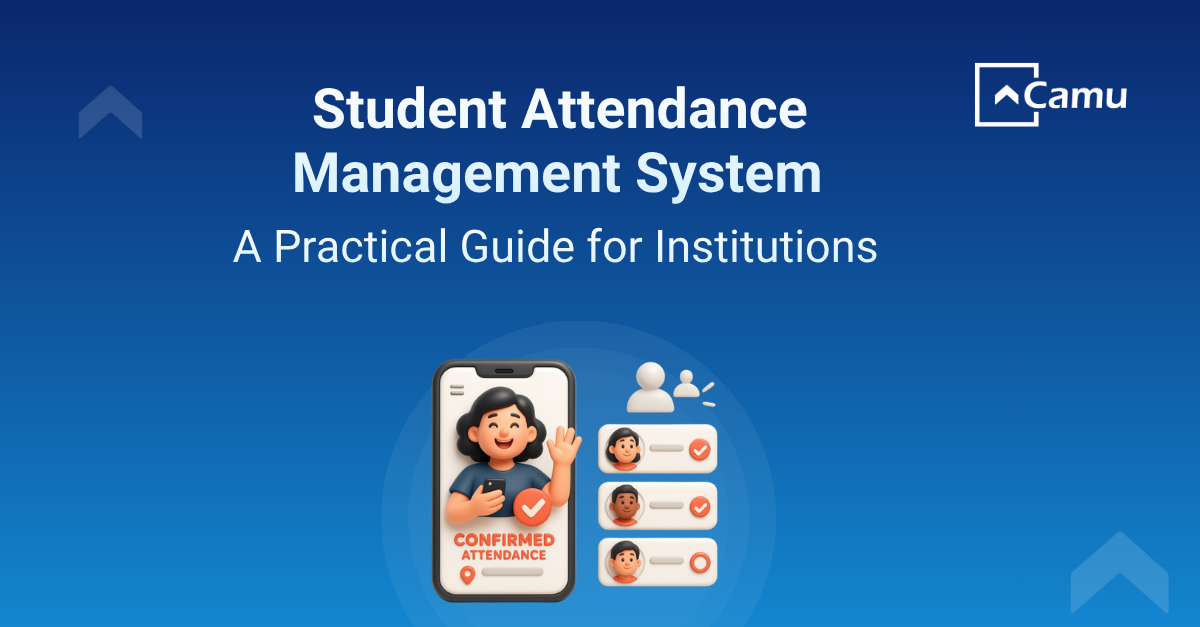
Camu supports multiple attendance capture methods, including QR code, facial recognition, biometric, and RFID. This gives institutions the flexibility to choose the attendance method that fits their classroom, campus, or academic model.
Because attendance is connected with timetable and academic planning, faculty can mark attendance from the scheduled lecture. Institutions can also record late attendance with the exact arrival time, giving academic teams more detail than only Present or Absent.
Camu also supports a controlled attendance workflow where faculty can save attendance first and publish it when ready. Once published, the attendance becomes student-visible and is not casually editable. This helps institutions separate review-stage attendance from final attendance records.
Attendance communication can also be managed through SMS and email. Institutions can send attendance-related updates to students and parents, configure message templates, and enable late attendance notifications.
With Camu, institutions can support:
Period, morning, afternoon, or day attendance
Manual, QR code, facial recognition, biometric, and RFID attendance capture
Attendance cut-off configuration
Late attendance tracking
Attendance communication through SMS and email
Parent and student notifications
Faculty-friendly attendance workflows
Student-wise and class-wise visibility
Reports and dashboards
Connected SIS, timetable, and academic workflows
This helps institutions move from manual attendance tracking to smarter, faster, and more accountable attendance management.
Smarter Attendance Supports Better Student Engagement
Attendance is one of the strongest early indicators of student engagement.
With the right digital system, institutions can move beyond manual tracking and build faster, more accurate, and more insight-led attendance workflows.
Explore how Camu’s Attendance Management System helps institutions automate attendance, improve visibility, and support better student engagement through connected digital workflows.
FAQs
1. Why do institutions need attendance management software?
Institutions need attendance management software to reduce manual work, improve attendance accuracy, generate reports faster, and identify low-attendance students earlier.
2. What are the different ways student attendance can be captured in Camu?
Student attendance can be captured through manual roll call, QR code, facial recognition, biometric, RFID, or other digital methods depending on the institution’s setup.
3. How does attendance affect student engagement?
Attendance patterns often show how engaged a student is. Regular absenteeism may indicate academic difficulty, disengagement, or support needs.
4. What should an attendance tracker for education sector include?
It should include digital attendance marking, multiple attendance capture methods, real-time visibility, absentee tracking, reports, dashboards, alerts, and integration with student records.
5. How does Camu support attendance management?
Camu supports attendance management through configurable attendance modes, digital attendance capture, attendance cut-off rules, late attendance tracking, communication workflows, reports, dashboards, and connected SIS workflows.