Key Takeaways
CHED reporting depends on information generated across multiple university functions.
Fragmented records make data collection, reconciliation, and reporting more difficult.
An integrated Student Information System connects student, academic, and administrative information through defined workflows.
HEIDA highlights the importance of reliable, structured institutional data for higher education planning and oversight.
An SIS supports reporting readiness, but universities still need appropriate data governance and validation processes.
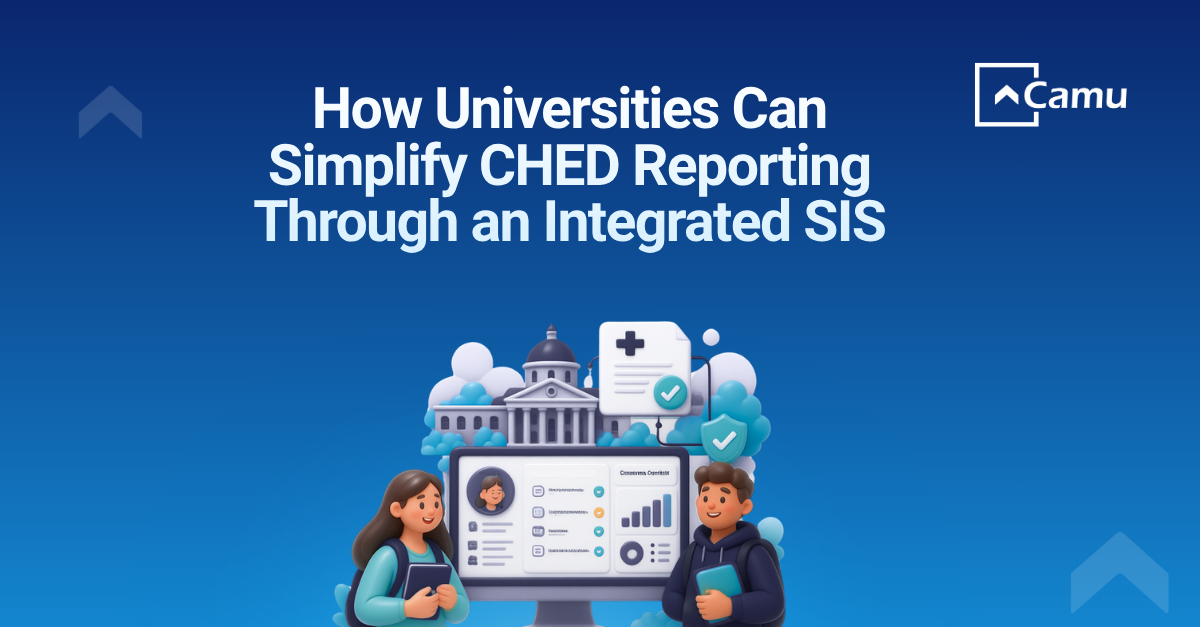
Universities in the Philippines face massive regulatory hurdles, particularly when compiling granular, error-free compliance data for the Commission on Higher Education (CHED). In traditional campus ecosystems, vital data points—such as student enrollment, faculty credentials, and graduation registries—remain trapped in disparate departmental spreadsheets.
Why CHED Reporting Becomes Difficult
For universities evaluating CHED reporting software Philippines solutions, the reporting process often starts long before the submission deadline.
Information is generated across admissions, enrolment, academics, examinations, student records, faculty operations, and other departments.
When these records sit in separate systems or spreadsheets, reporting teams need to:
Collect information from different departments
Consolidate records into common formats
Check inconsistencies between datasets
Retrieve historical information when required
Prepare reports for submission
What an Integrated Student Information System Changes
A Student Information System provides a structured environment for managing student information and connecting academic and administrative workflows.
With an integrated SIS, universities can connect:
Student records
Admissions and enrolment
Programmes and curricula
Course registration
Attendance
Assessments and grades
Examinations
Fees
Student services
Reports and analytics
This creates a more consistent institutional data environment instead of maintaining separate records for each department.
Manual Reporting vs Integrated Data Management
| Manual Approach | Integrated SIS Approach |
| Data collected from multiple departments | Data maintained through connected workflows |
| Multiple spreadsheets and records | Centralised student information |
| Manual reconciliation | Consistent institutional records |
| Reporting starts close to the deadline | Data maintained throughout the academic cycle |
| Historical information requires manual retrieval | Historical information remains within the system |
| Reports require extensive consolidation | Reports and dashboards use available institutional data |
What Universities Should Look for in an SIS
When evaluating an SIS for CHED reporting readiness, universities should assess:
Centralised student records: Can the institution maintain student information consistently from admission through graduation?
Connected academic workflows: Are enrolment, programmes, courses, assessments, attendance, examinations, and progression connected?
Reporting and dashboards: Can authorised teams access current institutional information without extensive spreadsheet consolidation?
Historical data: Can teams review information across academic periods?
Data governance: Does the system support appropriate access controls, data maintenance, and audit requirements?
Integration: Can the SIS connect with LMS, finance, payment, or other institutional systems where required?
How Camu Supports Philippine Universities
Camu provides a unified Student Information System and Learning Management System for higher education institutions in the Philippines.
It helps universities maintain the academic and institutional information needed for CHED-aligned reporting through a connected Student Information System.
The objective is not to replace CHED's reporting environment. It is to give universities a structured institutional data foundation for reporting, analysis, and academic operations.
From Reporting to Data Readiness
CHED reporting should not begin when the reporting deadline arrives. Universities generate the required information throughout the academic cycle.
Admissions create student records. Enrolment establishes academic relationships. Academic workflows generate attendance, assessment, and progression data. The SIS connects this information and makes it available for institutional reporting and analysis.
Explore Camu’s Student Information System for the Philippines to see how connected academic and administrative workflows can help your university build a stronger foundation for reporting, analytics, and institutional data management.
FAQs
What is CHED reporting software?
CHED reporting software refers to systems that help universities organise, manage, analyse, and prepare institutional information required for CHED reporting.
How does an SIS help with CHED reporting?
An SIS centralises student information and connects academic and administrative workflows, giving universities a structured source of institutional data for reporting and analysis.
Does an SIS automatically submit reports to CHED?
Not necessarily. Submission depends on the specific CHED process, required format, integrations, and capabilities of the SIS.
What is HEIDA?
HEIDA is CHED's Higher Education Institutions Data and Analytics platform. It provides a digital workspace for authorised HEI and CHED teams to manage institutional information, review data, and support analytics and planning.