
Camu at
QS India Summit 2026
Camu participated in the QS India Summit 2026, organised by QS Quacquarelli Symonds, engaging with university leaders on AI‑enabled digital transformation and the evolving future of student lifecycle management.
Held from 1–3 February 2026 in Goa, the summit convened senior policymakers, Vice Chancellors, Registrars, Deans, researchers, and global higher education leaders to explore forward‑looking strategies for institutional excellence, international partnerships, and scalable innovation in higher education.
Building on the legacy of previous summits - where India’s rising global ranking performance, equitable academic partnerships, and future skills development were central themes - the 2026 edition continued to deepen strategic conversations around institutional excellence and transformation.

QS India Summit 2026
QS India Summit is one of the premier higher education leadership forums in the region, focused on institutional excellence, global rankings, innovation, and academic transformation.
Themed “India@2047: Building Skills, Achieving Scale, Driving Innovation,” QS India Summit 2026 fostered dialogue around how institutions can build future‑ready skills, expand educational impact at scale, and drive innovation across academic ecosystems in an increasingly competitive global landscape.
Strategic platform where university decision-makers explore:
- AI integration in higher education
- Data-driven institutional planning
- Digital campus transformation
- Student experience enhancement
- Global academic competitiveness

Institutions are focusing on:
- AI-enabled academic administration
- Integrated Student Information Systems (SIS)
- Cloud-based academic ERP platforms
- Real-time institutional analytics
- Scalable digital infrastructure
Camu’s Engagement at the Summit
Camu participated in the QS India Summit 2026 to actively engage in conversations shaping the future of higher education. As institutions accelerate digital transformation initiatives, there is increasing focus on modernizing academic infrastructure.
For Camu, the summit provided an opportunity to connect with university leadership and understand how institutions are approaching modernization, automation, and long-term strategic growth in an increasingly competitive global landscape.
Key Themes from QS India Summit 2026
AI in Higher Education
AI is no longer experimental in higher education - it is becoming foundational. Discussions focused on how AI can enhance efficiency, improve student outcomes, and inform leadership decisions, including:
- Automating academic workflows
- Predictive analytics for student success
- AI-powered engagement
- Intelligent reporting
Data-Driven Institutional Decision Making
University leaders emphasized the importance of centralized data systems that enable leadership teams to make informed, measurable, and future-focused decisions.
- Performance monitoring
- Accreditation readiness
- Strategic planning
- Outcome-based education tracking
Digital Campus Experience
Digital experience is increasingly influencing student satisfaction, retention, and institutional reputation on the global stage. With evolving student expectations and growing global mobility, universities are prioritizing:
- Seamless student journeys
- Mobile-first digital access
- Unified academic platforms
- Real-time communication systems
Camu’s Perspective on
Digital Transformation
At the summit, Camu engaged with institutional leaders to understand how universities are transitioning from fragmented legacy systems to integrated, AI-enabled digital ecosystems.
Digital transformation today is not about digitization alone - it is about building an intelligent academic ecosystem that supports agility, compliance, student engagement, and long-term institutional sustainability.
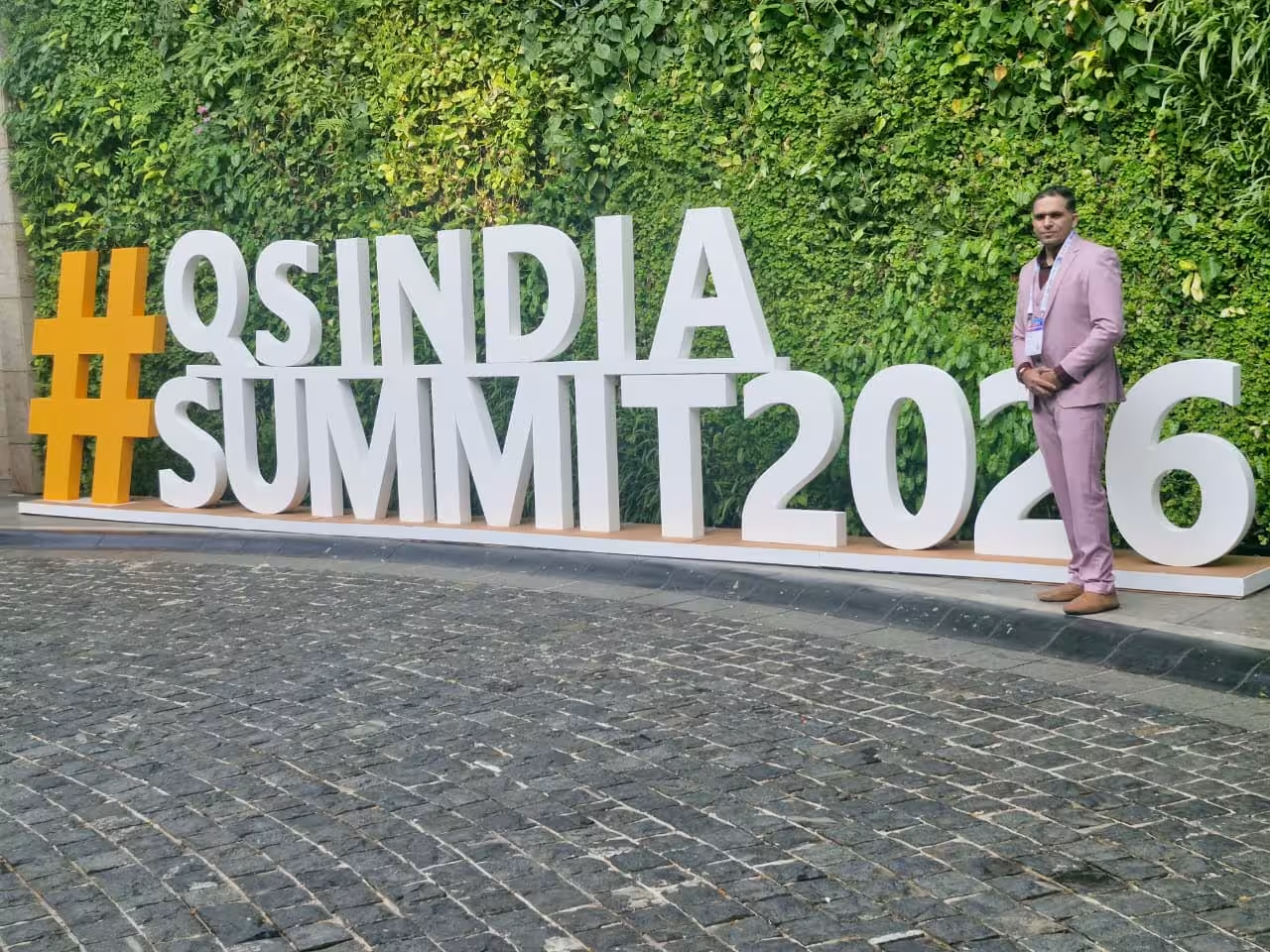
Insights from the Summit
“Attending the QS Higher Education Summit 2026 in Goa was inspiring. The future of higher education will be shaped by cross-border collaboration, student-centric outcomes, and integrated digital ecosystems.”
Highlighting the evolving priorities of Indian and regional universities towards a digital-first academic future.