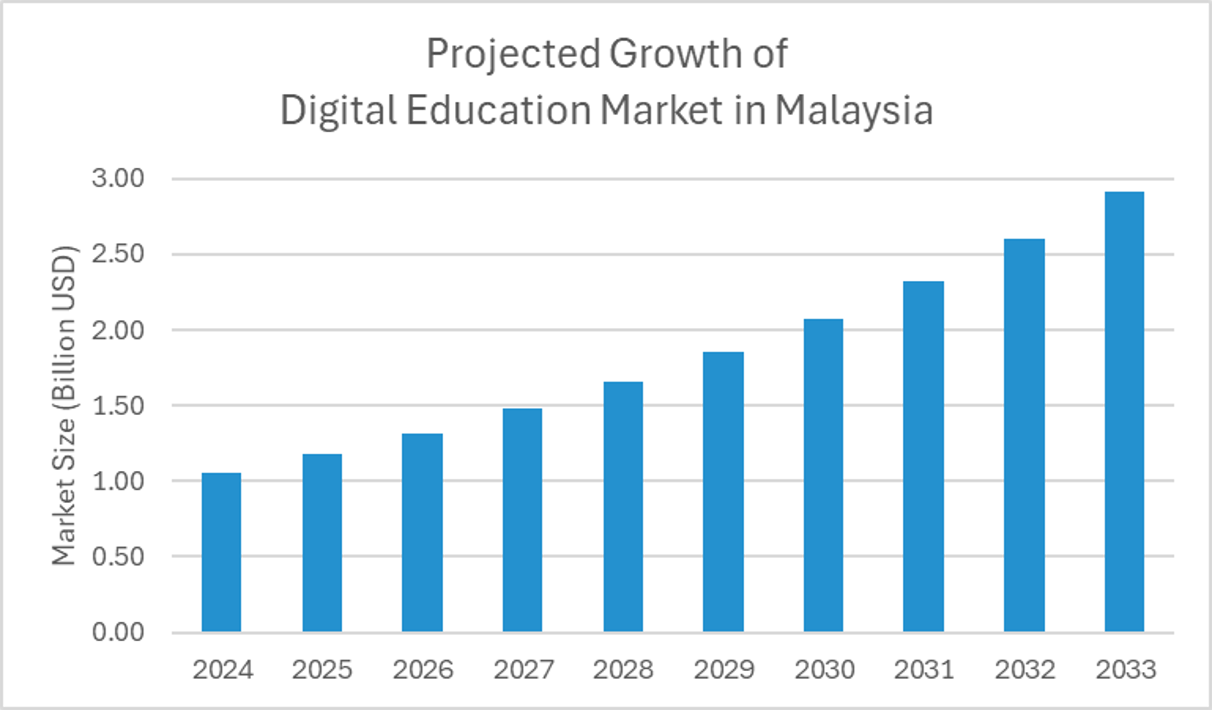
The digital learning space in Malaysia is growing very quickly. In 2024, the market reached USD 1.05 billion. It is expected to grow at nearly 12 per cent every year and reach close to USD 3 billion by 2033.
Over 70 % of higher education institutions have integrated digital learning into their curricula. Adoption of AI-powered learning tools in Malaysian universities has reached approximately 75 %, reflecting institutional investment in advanced educational technologies.
The digital education market in Malaysia is diversifying beyond traditional educational institutions. Online learning, corporate training and adult upskilling are all showing an uptrend. The rise of online education platforms, micro-credentialing, and AI-driven learning tools is broadening the end-user base beyond school students to working professionals and lifelong learners.
Taken together, these signals show that the digital education boom is not just hype. Much of it is backed by rising infrastructure, stronger digital access, growing public- and private-sector investment, and a rapidly expanding user base.
Evolving Role of Educators
With this kind of growth and digital momentum, educators in Malaysia (or those working with Malaysian students) need to adapt quickly.
Shift from traditional to hybrid/digital classrooms
As adoption of computer and internet infrastructure rises among institutions and households, more classes will likely mix offline teaching with online/digital delivery. Teachers should be ready to use smart-classroom tools (interactive boards, learning management systems) and leverage gamified or AI-driven educational platforms.
Use data & AI for personalization and efficiency
With increased digital adoption and widespread e-learning usage, tools are becoming available to track student performance, learning pace, and engagement. Educators should be prepared to use analytics and AI-based tools for personalised instruction, targeted interventions, and to free up time so they can focus more on pedagogy and student engagement.
Rethink assessment and feedback methods
Digital learning tools allow for new ways of assessing student progress. Instead of relying only on traditional exams, teachers can use adaptive assessments, digital portfolios and formative feedback tools. Educators will need to design assessments that reflect real understanding and discourage misuse of technology.
Broaden professional growth and collaboration through digital platforms
As the sector grows, there are increasing opportunities for educators to collaborate with peers or external experts. They should enroll in digital-pedagogy courses, engage in continuous upskilling, and even contribute to platform development.
Ensure equitable participation
Digital classrooms know no boundaries. Students from various socio-economic backgrounds are part of the same classroom. They may hail from different countries and different cultures. Educators must be sensitive to these equity gaps and consciously work towards bridging them.
Strengthen industry and real-world connections
As the use of platforms grows, education is becoming more closely linked to industry needs. Teachers will increasingly be expected to expose students to real-world case studies, live projects, authentic datasets and practical problem-solving scenarios used in industry. The teachers should strengthen their own industry connections to be able to guide students appropriately.
Play a role in responsible digital adoption
Educators play an important role in guiding students to use technology responsibly. They must teach students how to use AI tools for learning support rather than circumventing the thinking process or undermining assessment objectives. They should set clear expectations around academic integrity, data privacy and online behaviour. Technology should support learning and deepen understanding. It should not replace teachers or weaken students’ curiosity.
Contribute to content creation and platform design
Many platforms now seek teacher input to design curricula, assessments and learning content. Teachers may be involved in co-creating digital resources, testing new features or giving feedback on usability and learning impact. This allows educators to influence how technology supports learning, rather than adapting to tools that are not designed with classroom realities in mind.
The Road Ahead for Educators
The technology boom in education in Malaysia is clear and measurable. Classrooms are increasingly becoming digital. Government initiatives and improved internet access are strengthening the market.
The value of digitalization will depend on how educators adopt these technologies and put them to thoughtful use. Teachers must become curators of learning experiences, responsible guides for technology use, and active contributors to Malaysia’s digital education journey.
Discover how Camu helps institutions and educators adopt digital tools thoughtfully and effectively.