
Deliver the Academic Experience Today’s Students Expect
Designed for Flexible Pedagogy & Choice-Driven Learning
Flexibility and choice are no longer differentiators; they are baseline expectations. Today’s students evaluate universities the same way they evaluate digital products - by experience. From onboarding to graduation, they expect academic journeys that are intuitive, seamless, and free of unnecessary friction.
Understanding the New Student Mindset
How Gen Z Thinks, Learns, and Decides
Having grown up with digital platforms that personalize every interaction, they naturally compare academic systems to the consumer-grade tools they use every day. Gen Z students approach education with a strong sense of ownership. They want
Control over their academic choices,
Flexibility in how and when they learn, and
Experiences that adapt to their individual goals.
Why Flexible Pedagogies Drive Institutional Growth
Flexible academic models drive measurable, long-term institutional value:
Higher student engagement
Choice-driven academic journeys increase ownership, motivation, and participation across the student lifecycle.
Stronger learning and career outcomes
Personalized pathways align learning with student goals, improving graduate readiness and long-term value.
Improved retention and completion
Reduced academic friction and clearer pathways help students progress, persist, and complete on time.
Sustainable institutional growth
Institutions expand programs and enrollments without adding administrative burden or governance risk.
How Universities Are Delivering Flexible Pedagogy in Practice
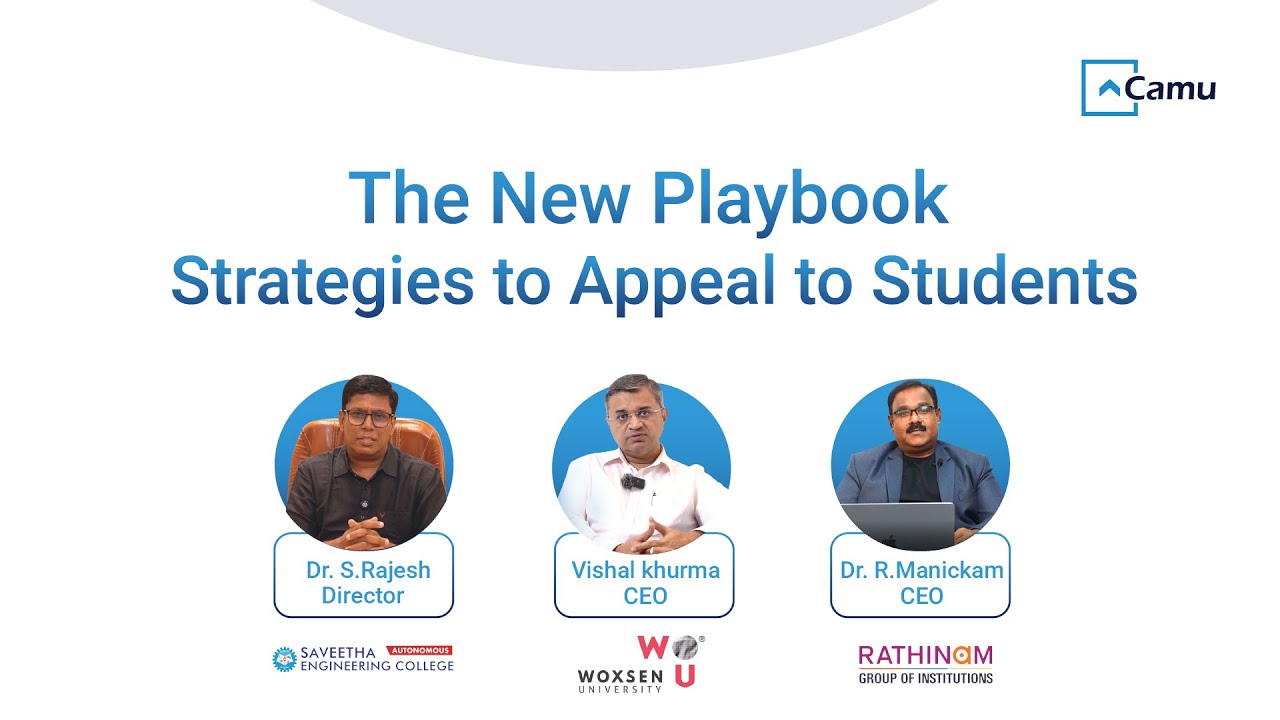
As institutions adapt to evolving student expectations, flexible pedagogy must work not just in theory, but in day-to-day academic operations. In this video, senior academic leaders share how Camu is powering flexible course registration under CBCS - enabling student choice, interdisciplinary learning, and scalable academic governance without adding administrative complexity.
Their experiences reflect how universities are delivering the modern academic experience students expect, while retaining structure, compliance, and institutional control.
The Institutional Challenge
Why Traditional Academic Models Are Falling Short
Most academic systems were built for:
- Fixed curricula and credits
- Limited elective flexibility
- Manual approvals
- Disconnected platforms
As institutions scale, flexibility becomes increasingly difficult to manage.
Enabling Choice-Based Academic Models
Flexible Pedagogy Is No Longer Optional
Choice-Based Credit Systems (CBCS) empower institutions to offer:
- Greater student autonomy and decision-making
- Personalized academic pathways
- Reduced academic stress and bottlenecks
- Higher engagement and completion rates
Designed for Choice. Built for Governance.
How Camu Enables Academic Flexibility at Scale
Camu enables modern academic models through:
Flexible curriculum and credit structure design
Elective, interdisciplinary, and program-based choices
Fully automated course registration by students.
Students can fast-track their graduation, choose a flexible lecture schedule and take a break in study if needed
What You'll Experience in the Live Demo
In the demo, you'll see how Camu brings flexibility to life across the academic lifecycle - from configurable curriculum frameworks and student choice workflows to streamlined faculty approvals and real-time tracking of progress, credits, and compliance.